 WonksAnonymous
Disclosures
How WonksAnonymous handles commercial relationships, supplier data, sponsorship and readers' personal details.
Our analysis is about what it costs to buy and run production equipment. This page lists the commercial rules we follow, so you can weigh our work with them in mind.
Commercial relationships
Nobody can pay to change a conclusion. If an article discusses, links to or uses data from a business we have a commercial relationship with, the article says so at the point where that business appears, not only on this page.
How we handle supplier data
- Our conclusions may recommend not buying equipment. “Current volume does not justify the machine” is an acceptable finding.
- We do not rank or recommend suppliers.
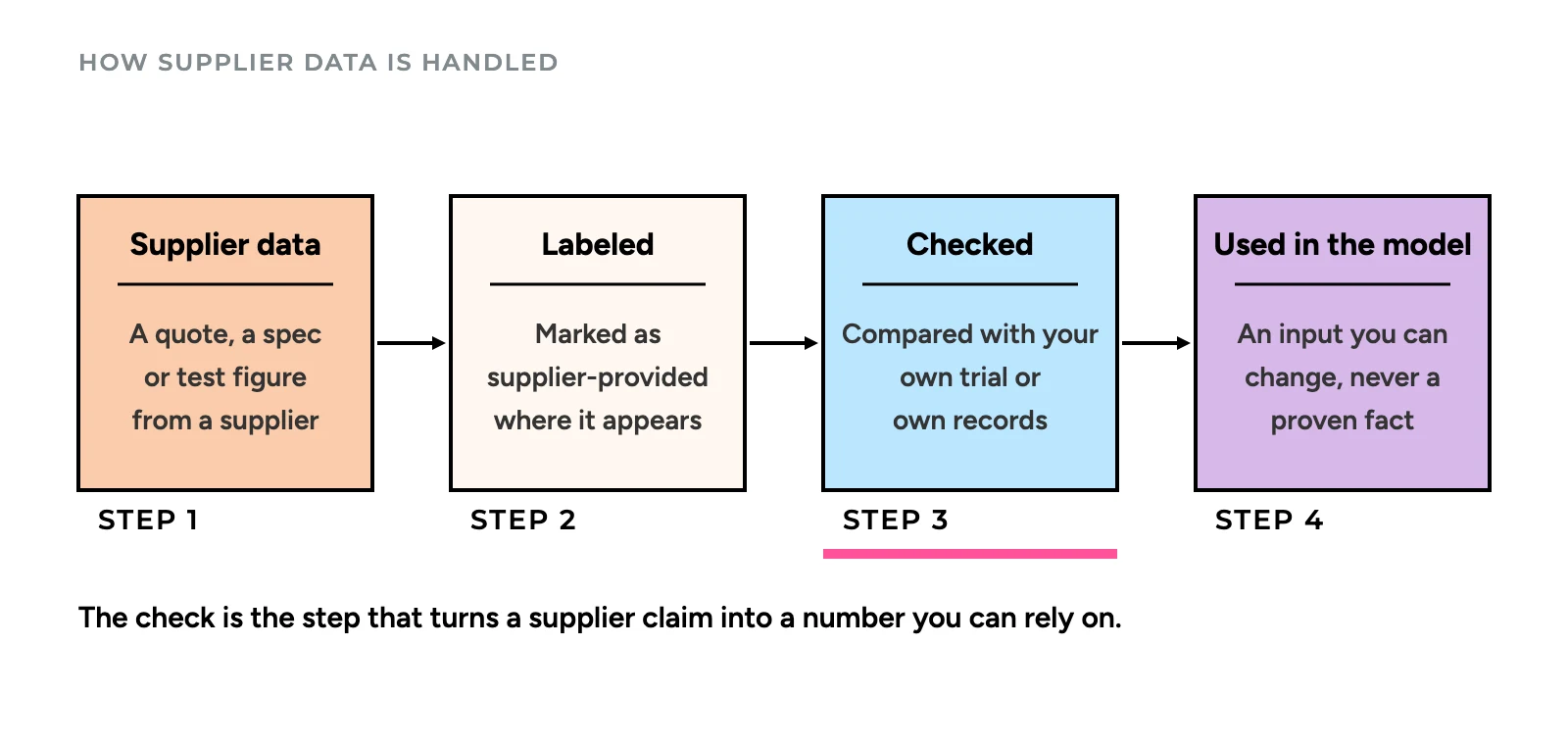
- Data provided by a supplier is labeled as supplier-provided and shown separately from data from other sources.
- We link to a business only when the link helps a reader check a fact or take a step they chose.
What a disclosure looks like
A disclosure sits next to the mention, not only on this page. These sample sentences use placeholders, so no business is named here.
Disclosure: WonksAnonymous has a commercial relationship with [business]. That relationship did not change the figures or conclusions in this article.
The cost data in this table was provided by [a supplier] and has not been independently verified.
A paid link carries rel=“sponsored”, and the sentence next to it says so. If a business is mentioned only because a reader needs to find it, the article says that too.
How supplier-provided data is labeled
A figure that came from a supplier gets a label in the text or in the table row where it appears. A typical label looks like this:
Supplier-provided: lead time 12 weeks (stated in quote, not verified)
Supplier-provided figures sit in their own rows or columns, apart from our calculations and from public data, and they never appear inside a total without a label. The Editorial Policy explains how we keep facts, calculations and assumptions separate in general.
Quotes and test data in our models
In our cost models, a quote or test result from a supplier is an input to verify, not a fact. A throughput figure from a supplier’s test describes that test, on that product, under those conditions. Your product and your line may behave differently, so we recommend a trial on your own material before relying on it.
For the same reason we show a quote’s scope explicitly. Two quotes only compare when they cover the same items, as Comparing Packaging Machinery Quotes on a Like-for-Like Basis explains. The True Installed Cost of Packaging Automation lists the items that often sit outside a quote. After installation, the 90-day review compares promised figures with measured ones.
So a supplier’s claimed speed, price or lead time enters a model as a scenario input we can vary. We show the result with the figure as stated and with a more cautious one, so you can see how much the conclusion depends on it. A claim that can’t be checked is never used to carry a conclusion on its own.
If you think a piece is biased
Tell us. If a conclusion seems to favor a type of equipment or a business without support, write through the Contact page and name the passage. If we find a factual error or a missing disclosure, we fix it and record the change as described on the Corrections page. If the disagreement is about judgment rather than fact, we will say so and leave the reasoning visible so you can decide. Supplier data is most likely to appear in import-related pieces, which the Trade and Supply Chains hub lists.
What a relationship can and cannot change
A commercial relationship can affect which businesses a reader might want to find, so it can affect what we link to. It cannot change a formula, an input, a conclusion or the order in which options are compared. Those follow from the stated assumptions, and you can rerun them.
We also avoid wording that makes a business sound good or bad on our say-so. When a piece discusses a class of equipment, it describes costs, conditions and trade-offs, not brands. When a number depends on a supplier’s statement, the label says so, and the model shows how far the result moves if that statement turns out to be wrong. That sensitivity check is our best guard against a flattering input, and anyone reading the article can use it.
Sponsorship
We do not currently publish sponsored content or paid links. If that changes, the content will be labeled and any paid links will be marked rel=“sponsored”.
Readers’ personal details
We do not pass readers’ personal details to any business. If we ever offer a way to request an introduction to a supplier, we will say who receives the details and why, and we will ask for your consent first. The Privacy page describes what the site collects today.
The earlier blog
The earlier use of this address is described on the archive page.
Related policies are the Editorial Policy and Corrections. Send questions about these rules through the Contact page.