 WonksAnonymous
About the Archive
What this web address hosted before WonksAnonymous, and how we are handling the earlier blog's old addresses.
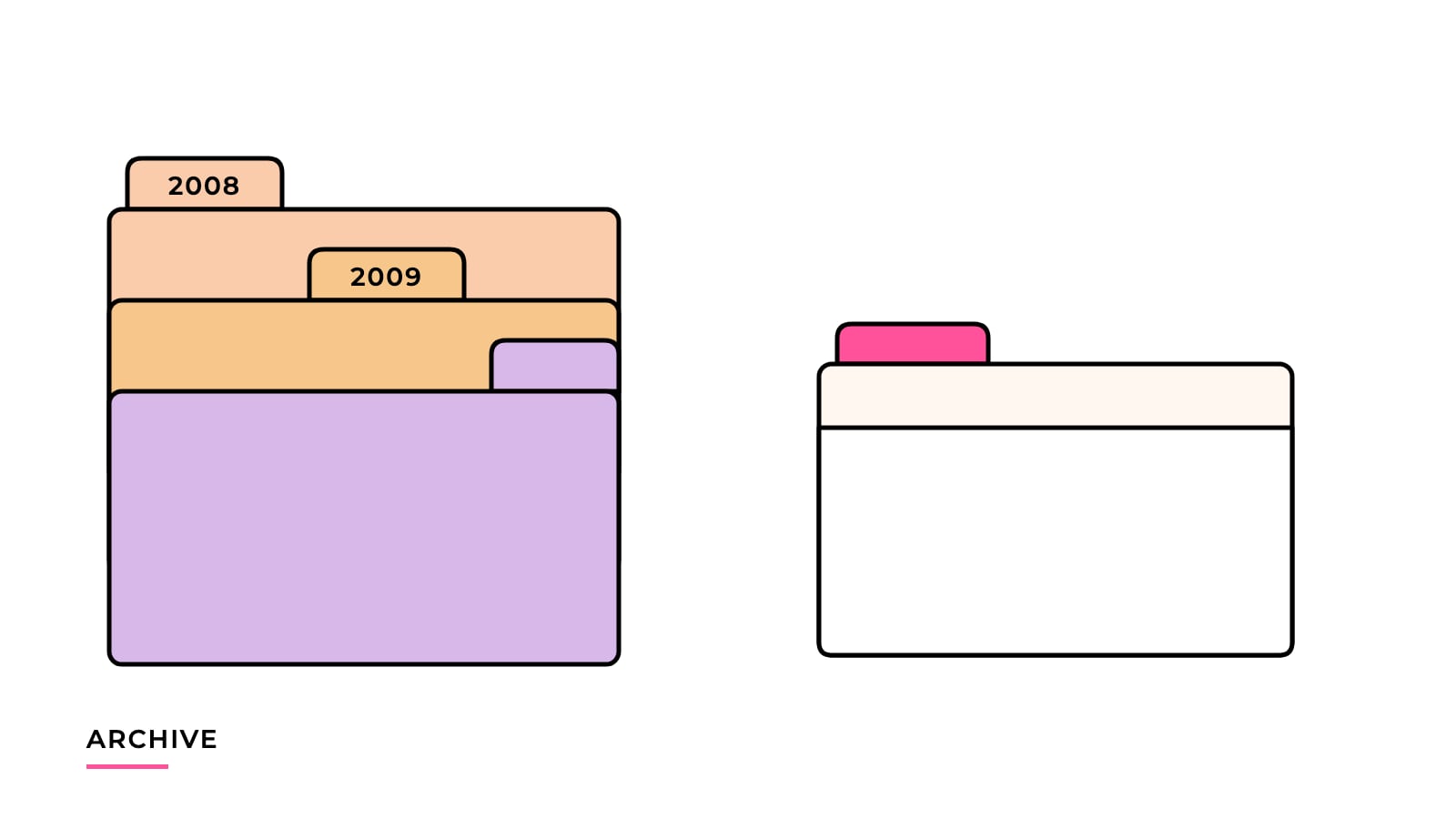
What this address used to be
Links from other websites show that, around 2008 and 2009, this web address hosted a blog about economics and public policy. It was written by other people.
What we know about the earlier blog
Very little, and we say only what we can support. Links from other websites show that it covered economics and public policy around 2008 and 2009. That is all we know. We don’t know how many pieces it contained, and we don’t guess at titles or authors.
No connection
The current publisher has no connection to those authors. Buying a domain does not transfer the rights to the writing once published on it, and we did not acquire any.
What we are doing with the old addresses
We are reviewing them one at a time. For each address we try to identify the original author, the date and the rights holder before deciding anything. In the meantime:
- We republish an original piece only with permission from its rights holder, and with the original author and date shown.
- Where we write something new on an old topic, it is clearly labeled as new. The notice reads:
This is a newly written retrospective published by WonksAnonymous. It is not the original article previously hosted at this URL. Historical references to this address do not imply endorsement of this new version.
- We do not redirect old addresses to unrelated pages, because that sends readers somewhere they did not ask to go.
- Addresses we cannot responsibly restore return a “not found” page.
Why we take this approach
If you land on an old address, you should be able to tell what is actually there. A page that looks like the original but was written later would mislead you, and so would a redirect to something unrelated. Labeling new work as new, and returning “not found” where we have nothing responsible to show, keeps the record honest.
How we review an old address
Every address goes through the same steps, in this order.
- Find the exact URL from link records, so we work from what other sites actually pointed to.
- Check archived copies, to see what was really on the page.
- Identify the author and the date from the page itself, not from memory.
- Establish who holds the rights, and whether they can be reached.
- Decide: restore the original with its author and date (only with permission), publish a new retrospective labeled as new, or leave the address as not found.
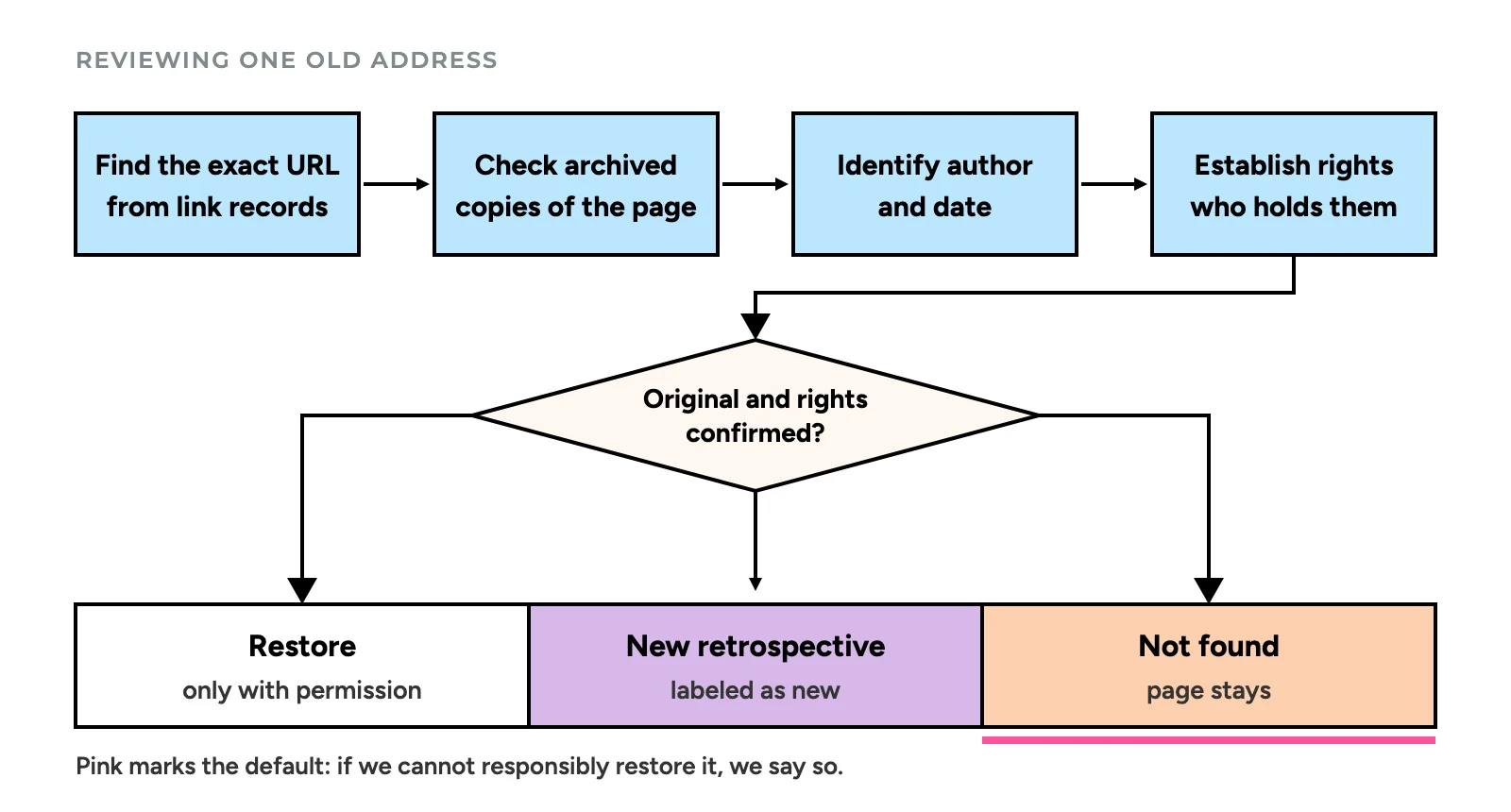
Nothing is decided before step 4 is done. If we can’t establish the rights, restoring the original is off the table.
Why we do not redirect everything to the homepage
Sending every old address to the front page is easy, and we avoid it for two reasons. It misleads readers, who arrive expecting a specific piece and land on something unrelated. It also works poorly with search engines, which tend to treat a redirect from a missing page to an unrelated one as a soft 404: a page that says “found” but offers nothing that matches. An honest “not found” is clearer for both.
When rights are unclear
The hard cases are rarely about whether a page exists. They are about who may republish it. A dated page with a named author still belongs to that author, or to whoever the author assigned it to. A domain name that later changes hands carries none of that. So when we can’t find a rights holder, we don’t restore the original text, even if an archived copy exists and even if the topic would suit this site.
That leaves two honest options. We can write something new on the subject, in our own words, with the retrospective notice shown above, or we can leave the address as not found. We choose based on whether a new piece would actually help a reader, not on whether the old address had links pointing to it. Either way, someone arriving from an old link finds a clearly labeled new piece or a plain not-found page, and is not misled.
Status
This page will be updated as each address is reviewed.
No historical pages have been restored yet.
If you wrote for the earlier blog
If you wrote for the earlier blog or hold rights to its content, please contact us. We’d rather hear from you than guess.
What you will find here now
The site now publishes analysis in three topics. Production Economics covers unit costs, throughput and downtime. Automation Investment covers payback, utilization and installed cost. Trade and Supply Chains covers imported equipment, quotes and contract packing.
Start with Automation Payback, ROI and TCO, or Cost per Good Pack if running cost is your main concern. For supply-chain questions, begin with Imported Equipment Costs Beyond the Factory Price. None of this restores the earlier blog, which is a separate matter described above. The Editorial Policy explains how we write.
What WonksAnonymous covers now
Today the site is a research publication on production costs, automation investment and supply-chain decisions. You can read the analysis or learn more about us.